Indiana State Archives Breaks Ground For A New Building
On August 25, 2023, about a hundred people gathered together to watch the ceremonial ground breaking for the much needed new facility for the Indiana State Archives. It will be located in Indianapolis across the canal from the Indiana Historical Society on East Ohio Street, and will extend north to East New York Street.
On the pleasant evening of Tuesday, August 31, 1841, the Indianapolis Band played a concert for the general public at the Marion County Court House. That same day George and Jacob Chapman, the editors of the Indiana State Sentinel, had published an editorial urging the city’s citizens to support the band by attending its concert, unless they be ruled by bigotry. For most of the band members were German Immigrants, and who as an ethnic group shared their culture with others. The community readily accepted German customs into its social and economic life.
An example of successful German immigrant was Charles Mayer, an ambitious young man from Marbach, Germany, who arrived in Indianapolis, Indiana, in the fall of 1839. He had left his native country to find a business position after finishing a four-year merchant apprenticeship , and to avoid the strict German conscription laws. Within two years he had found an opportunity to begin his own business in Indianapolis, and by 1847 had developed a niche in the city’s retail business, an enterprise which would continue over one hundred years. Mayer’s life in early Indianapolis was consumed with his efforts to be successful in business, though sometimes he would get tired and discouraged; but his conservative personal habits and business methods kept his determination alive. His creative personality produced a distinctive business style.
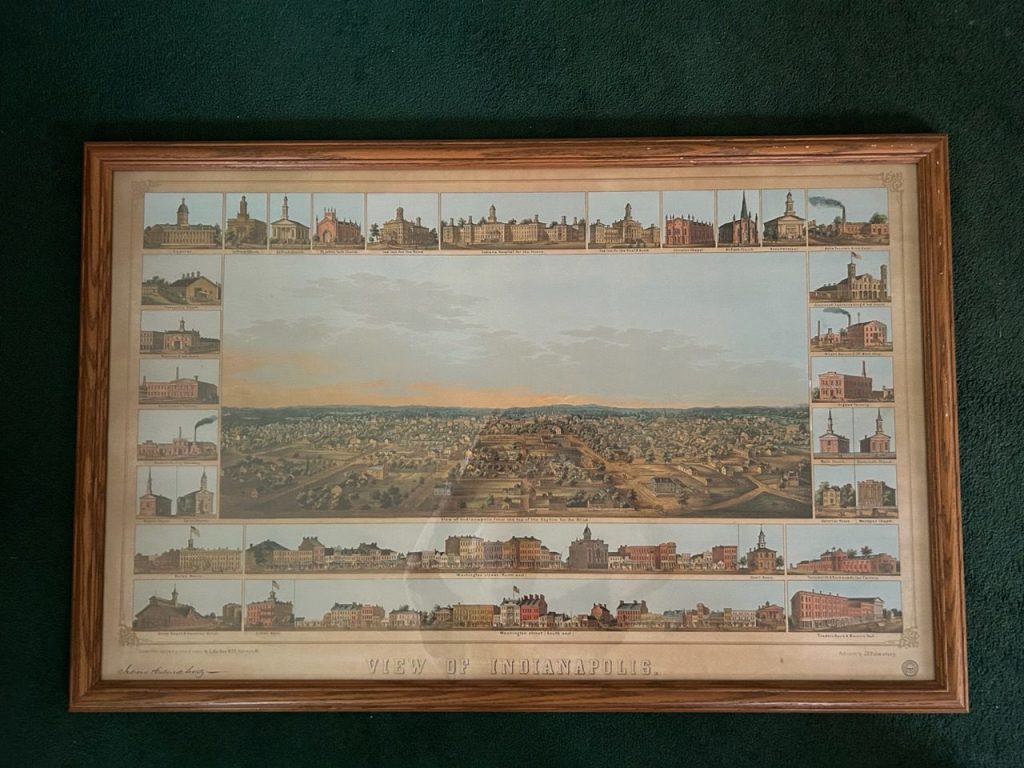
A view of Indianapolis in the early 1840s, before the railroad arrived in 1847
Mayer was nineteen years of age when he immigrated from Marbach, Germany, to America. He sailed from Bremen, Germany, on June 28, 1839, and landed in Baltimore, Maryland, on August 25, 1839. He arrived with one hundred dollars and a trunk of clothes after enduring a miserable trip across the ocean in a small, two-masted ship. A German merchant in Baltimore advised Mayer that there were few business opportunities in the city. He recommended him to Carl F. Adae, a successful German wholesaler in Cincinnati, Ohio, who was busy sending goods to new markets in the West.
After four days in Baltimore, Mayer made a contract for a trip to Pittsburgh, Pennsylvania, which cost him fourteen dollars. He took a magnificent boat to Philadelphia, and from there rode in a forty-car train to Columbia. He then took a canal boat, which had some rough Irishmen on board. The canal boat was drawn by two horses, but most of the time he walked along the berm to gather fruit. He was impressed by Pennsylvania’s rich farmland and the new factories in Pittsburgh, where he arrived on September 5th. Mayer counted thirty steamboats waiting for rain to raise the water on the river in Pittsburgh. He paid six dollars for passage on the Ohio River to Cincinnati , Ohio, where he arrived on September 11.
In Cincinnati Mayer gave a letter of recommendation to Adae, who referred him to a merchant named Charles Reemelin. This merchant let Mayer work for him until he could find a permanent position. Three weeks later a merchant in Indianapolis named Charles Martens wrote to Reemelin that he was seeking to employ a young man to help him in his general store. Martens preferred a German immigrant as an employee because he believed a German would take more from a boss and work harder than an American. Mayer obtained the position.
To reach Indianapolis he again traveled by steamboat on the Ohio River for one day, three hours by railroad, and twenty-four hours by stagecoach. He found his stagecoach ride agreeable, though primitive. The four horses were changed every four hours, then driven at full speed over ditches, creeks, stumps, and hills. Most of the time he bounced up in the air. Just as he wondered about the safety of the ride, the coach was thrown over on its side. A spring had broken and they had to walk until they came to a blacksmith shop, but they finally arrived at the small, land-locked capital of Indiana.
Mayer’s first impressions of Indianapolis were not complimentary, but he liked it nevertheless. The town was small, but important. Murder, robbery, house fires, and envy were as common here as in Germany, perhaps even more so. There were druggists, doctors, and merchants by profession, but jobs were scarce. There were also churches of many confessions in the city, including a Lutheran church with German and English services. Many German immigrants lived in the area, but it was not a healthy place to live. There was much fever in the warmer months, which was dangerous for the young and old, as well as for the immigrants.
Mayer observed that American men were lean, pale, and thin because most of them chewed tobacco, smoked cigars, drank liquor, and ate too many sweets; and American women were overly concerned about their dress. He noted that the people of Indianapolis, including the children, did not walk to places, but traveled even short distances by horse. He also complained about the quick change in the weather from hot to cold temperatures within three weeks. He kept healthy, but the store he worked in was cold because the front was kept open and the stove was only for the use of the customers to keep warm.
Mayer wrote back to a relative in Germany from his new home in Indianapolis on November 10, 1839, “I like business and bartering very much, even if you have your own business you are a servant of the people. If a lady or the Governor or a negro comes into the store, you keep your hat on the head and do not make compliments.
Mayer respected his new employer in Indianapolis, Charles Martens, though he thought he was too fond of the dollar. Martens ran a wholesale grocery store selling corn, tobacco, cabbage, turnips, and maple syrup, as well as retail dry goods, hardware, shoes, and other staples. Mayer rose before dawn every day and worked in Marten’s store until 9:30 at night. His only day off was Sunday. Martens agreed to provide Mayer with free lodging, board, and washing, plus ten dollars a month, for the next six months. But Mayer was planning for his future. He believed if a young man in America had no binding obligations or money, and if he were willing to work hard in any line and save his money, then he could start his own business in three or four years.
Mayer’s honest opinion of early Indianapolis coincides with contemporary accounts. The site of Indianapolis at the juncture of White River and Fall Creek had been chosen in 1820 because it was near the geographic center of the state of Indiana. But the swampy area bred malaria which tenaciously clung to the area for decades, causing seasonal fever and chills for its inhabitants. The symmetrical mile-square plat laid out for Indianapolis by Alexander Ralston in 1821 had been staked off and most of the lots had been sold by 1840. Many of the streets, though, were still full of tree stumps, and deep mud during wet weather made the streets almost impassable. The houses had been built on spacious lots with ample yards and gardens, and many tradesmen had settled there to start their own business. They earned their living while residing in one- and two-story wood-frame buildings built in rows along the city’s well-traveled streets.
Washington Street was the Main Street of Indianapolis in 1840. It was part of the nation’s first interstate highway, the National Road, and had been graveled from about the Court House on East Washington Street to the State Capitol building on West Washington Street. Between these two important government buildings were general stores, grocery stores, hotels, taverns, blacksmiths, a wagon-making shop, an undertaker, two doctors, and a newspaper office, as well as a two-story brick office building used by the state treasurer and auditor. Business was especially brisk during sessions of the annual state legislature in December and January.
Many travelers passed through the city on their way to Illinois. The city’s reputation for ill health deterred some permanent settlement, but the city’s population grew from 2,692 to 8,091 residents between 1840 and 1850. Many were attracted to the city because of its importance as the state capital of Indiana, and its potential business opportunities. Henry Ward Beecher, who later became a famous Presbyterian preacher in New York City, misinformed his wife about the city’s health problems before they moved to Indianapolis in the summer of 1839; but he desired to preach to and have an influence on the state’s most important men. A few months later Charles Mayer accepted the clerk position in the city to find a new home in America and to better himself in business.
Mayer worked for Charles Martens several months and then for Edmund Browning at Washington Hall on East Washington Street. Within fifteen months of his arrival in Indianapolis, however, he was in a position to start his own general store and formed a partnership with a German friend named Henry Keller. With $250 capital they opened their own store in a one-and-a-half-story, front-gabled, wood-frame building at 29 West Washington Street. Their business house measured sixteen and one-half feet wide with a depth of seventy feet. They rented it from M. White for six dollars a month and an adjacent store-room cellar for fifty cents a month from C. A. Ferguson.
Mayer and Keller first opened their store for business on November 18, 1840, the day before a cold and gloomy Thanksgiving Day. Their first purchase for the store was a stove that cost eighteen dollars, which was paid for by bartering goods such as sugar, whisky, and lead pencils with their landlord. Mayer soon bought out his partner, and moved his residence from Catherine Baker’s boarding house to the upper half-story of his store. He cooked his meals on the stove and slept on the upper floor among his stock of goods. From his window he could watch life pass by on the busiest street in Indianapolis.
Mayer could not have picked a worse time to open a business in Indianapolis. The country was in an economic depression from 1839 to 1843, following the panic of 1837. Indiana’s extensive internal improvement program, adopted in 1836, had bankrupted the state by 1839 and circulated money was scarce. Mayer later wrote that he had no time for anything outside of business. He did his own bookkeeping and correspondence, ordered all the store’s merchandise, stocked and arranged his goods, besides working behind the counter from early morning till late at night, often 11:00 P.M. So much reading and writing at night strained his eyesight. He wearily noted that it took much effort to be successful in business.
Mayer’s original bookkeeping was simple, yet detailed. He scribbled the customer’s name and a description of the purchases in a small daybook at the time of the transaction. In the evening he would transfer this information with a pen into a more permanent ledger. His first account book, started on November 18, 1840, was written in English, interspersed with a few German words.
On the first page of Mayer’s first personal ledger he wrote “Strazza #1”, followed by an alphabetical listing of wholesale dealers and customers. At the top of each ledger page he entered the customer’s name and sometimes a description of the person’s trade, such as Andre (the Music Director), Eaglefield (Sawmiller), Gaston (Carriagemaker), Judge Morrison, Esqr., Sheets (Papermaker, Secretary State), Lawyer Quarles, or the Daguerreotype Man. He filled the columns beneath the names with the dates of purchase and a description of the items purchased. He put the amounts paid or owed in the two right-hand columns headed with “Sollen” and ” Haben”, meaning Debit and Credit.
Mayer sold to the customers of his new store anything they wanted, or “everything that can be thought of.” He sold dry goods such as pantaloons, “strohats”, calico, cotton yarn, black thread, and blue shirting; hardware such as shovels, nails, and beaver buckets; fancy goods such as silverware, stoneware, and Queensware [China]; confectionary and spices such as licorice, sweet chocolate, cinnamon, and allspice; bottles, pocketknives, and toys; wines, Rio coffee, Spanish cigars, and assorted pipes; and much more. He bought fresh produce, fruit, and eggs locally, and barrels of beer from a local dealer named John Saux. He sold beer by the “glass” all year round, but more during hot weather. In the summer months of 1841 through 1844 he bought at least one barrel of beer every one to three days from Saux.
Mayer’s little store had a strong German element, but appealed to all types of people. His first business ledgers, kept from 1840 to 1847, list about three hundred and fifty different customers, which was about five to ten percent of the population of Indianapolis. Many customers were German immigrants such as Charles Bald, a liquor dealer; a teenager named Valentine Butsch, who later owned an opera house; a shoemaker named Gottlieb Fahrback; Hermann Krumpanizky, a band member; and Anton Wishmayer, a cooper.
Many of Mayer’s customers either lived or worked in the neighborhood of his store. Dr. Axtel, who had a cork leg, lived a block west on West Washington Street. Jacob Chapman, the editor of the “Indiana State Sentinel”, located on West Washington Street, sometimes came in for a glass of beer. Hiram Gaston, whose wagon making business was across the street, sent his “boy” many times over to buy a few groceries. William Weaver and Charles Williams, who operated an undertaking business down the street, often frequented Mayer’s store. Retailers Julius Nicolai and Louis Werbe, who lived and worked in wood-frame houses just to the west of the State House, were customers, as was William Vanblaricum, son of the city’s first blacksmith. John Carlisle & Co., who in 1840 manufactured and packed the city’s first commercial flour at a mill located on the arm of the canal that crosses West Washington Street, traded with Mayer.
Several state and city officials frequented Mayer’s store also, for it was located within two blocks of the State House. Obedia Hannis, State Auditor, and William Sheets, Secretary of State, bought goods at the store; as well as Henry Nelson and Charles Campbell who were lobbyists at the legislature, frequent jurors, and annual delegates to the Democratic state convention. An infrequent customer was William Brown, a popular Democratic legislator, former Secretary of State, and State Representative in the 1840s. James Blake, an active civic leader and Democrat who owned a farm just to the north of the State House, also stopped into Mayer’s store, but not often.
The politicians who had the most influence on Mayer’s business were Democrats Nathan B. Palmer, Judge James Morrison, and Captain John Cain. Palmer was the State Treasurer from 1834 to 1841, residing and working in the two-story brick building across the street from the State House on West Washington Street. He was in office when the State went bankrupt in 1839, but was considered by both parties to be the most capable and honest man for the job. His signature, “N. B. Palmer,” was affixed to the interest- bearing script issued by the State in 1840 and 1841, which was circulated as money for several years when Mayer was building up his business.
Palmer retired as treasurer in 1841 to run for the seat of the Sixth Congressional District, but was defeated. He was then appointed to report on the condition of the State Bank, and traveled around the State to examine the branches of the State Bank. Mayer felt the Indianapolis branch of the State Bank was a sound enough place to keep his business deposits.
Mayer’s business depended on the reliability of the roads to Indianapolis. The transportation of goods by flatboat or steamboat on the White River to Indianapolis did not prove feasible, and the State’s construction of a canal system was curtailed by bankruptcy, so the building and improvement of roads was paramount. The north-south Michigan Road from Madison to South Bend and the east-west leg of the National Road from Richmond to Terre Haute were completed through Indianapolis in the 1830s. Heavy wagons and fast stage coaches often traveled on these rutted roads with goods, as well as immigrants and travelers, but there were frequent accidents and the travel time was slow.
In early 1842 State officials were making tentative steps toward continuing through private companies the public improvement projects begun in 1836. Palmer attended a meeting at the Court House to discuss plans for completing the Madison and Indianapolis Railroad where he was delegated to a State convention with other counties interested in the completion of the railroad, and then became a director of the private company organized in June, 1942, to complete the line to Indianapolis. The extension of this railroad line to Indianapolis would later have a direct bearing on the success and expansion of Mayer’s store, as well as on the city’s growth.
The Palmer House, a landmark hotel, constructed on the southeast corner of West Washington Street and Illinois Street in 1840-1841, about a half-block west of Mayer’s store, and a block east of the State House. N.B. Palmer was the owner of this establishment, and it quickly became the headquarters of the Democratic Party in the city. Mayer had many Democrat customers due to the close proximity of the Palmer House. It was finished in time for the meeting of the 1841 State Legislature in December.
The “Indiana State Sentinel” announced on October 12, 1841, that the Palmer house would be open to the public on November 20, 1841. A ball was held at the new three-and-a-half story brick and wood-frame hotel on January 8, 1842, for the celebration of the anniversary of Andrew Jackson’s victory at the Battle of New Orleans. It was attended by three to four hundred of the city’s elite, including members of the both the Whig and Democratic Parties.The Palmer House was leased and operated by John C. Parker of Charlestown, Indiana, who often sent servants, stewards, and “members” to Mayer’s store for dry goods, groceries, or tobacco. On October 19, 1841, the Chapmans of the “Indianapolis Sentennial” wrote an editorial about the superior comforts of the house, especially for females, and recommended the hotel to the members of the State Legislature. For years merchants would advertise in the Indianapolis newspapers as being located east of, or across the street from, or in the Palmer House. Public and political speeches and gatherings were often held in front of it.
In the summer after the Palmer House opened, former President Martin Van Buren stayed there after a parade down Washington Street from the Court House, and a public receptions for him in front of the hotel. Judge James Morrison was chosen to address Van Buren on behalf of the welcoming citizens. It was not unusual for Morrison to be involved as a leader in civic activities. He was a tall, spare Democrat who was one of Mayer’s best customers. His frequent purchases of Spanish cigars and fishhooks corroborate contemporary accounts of his fondness for smoking cigars and fishing for black bass on the banks of Fall Creek and White River. But he was known to be judicious and responsible. He moved to Indianapolis from Charlestown, Indiana, after being elected Secretary of State in 1829 by the legislature, and he held that office until 1835. He was president judge of the fifth circuit court from 1839 to 1842, and president of the State Bank for ten years beginning in 1843. His responsible views and positions gave respectability to the anti-bank Democrat Party, and his work provided stability to the business life of the State and its capital city.In 1842 Morrison was secretary of the legislature’s Board of Internal Improvement, which reported on the progress of the development of the State’s transportation system. The extension of the National Road through Indianapolis was the most successful internal improvement in Indiana in the 1830s, for it was the capital’s first direct connection with the eastern seaboard states. The postmaster of Indianapolis at this time, Captain John Cain, took advantage of this new eastern route to develop a busy timetable of mail coaches to Washington D.C. and other eastern cities. When Cain had become the city’s postmaster in 1829 the only road out was south to the Ohio River.
Cain was a heavy set yet quick man who did not do things half-way. He enjoyed eating and drinking, was a man of letters, gained many friends and enemies, and was a partisan Democrat active in local politics. He owned the building located at 28 West Washington Street where he had his post office, across the street from Mayer’s store. He lost his job as postmaster about the same time Mayer began his business, because a Whig, William Henry Harrison, had won the Presidency. When Harrison died in April 1841, after only one month in office, Cain gained back his postmaster job, but after several months he voluntarily quit the post to try out an idea.
In the spring and summer months of 1842 Cain advertised in the “Indiana State Sentinel” that he would buy tobacco of good quality at the usual price. He planned to use his experience developing the mail routes to set up shipment of goods to and from Indianapolis. He shipped the tobacco to an eastern market and used the profit to buy dry goods wholesale and sell them retail in his old post office building. He advertised heavily and exuberantly in the Democratic “Indiana State Sentinel” and directed his advertisements towards towards the ladies. He sold a wide variety of cloth material including “Invisible Green, Cassimeres and Satinets, plain and fancy,” boots and shoes, sun bonnets to protect the ladies from the sun, and ladies’ wear.Beginning in September, 1842, Mayer bought goods wholesale through Cain to obtain products from the eastern cities. From September through December, 1842, Mayer ordered thirty-two deliveries of goods from Cain, and paid for them by cash once or twice a month. In January and February, 1843, he ordered five deliveries, sixteen deliveries in March, and three deliveries in April. The goods from the beginning of the year cost Mayer twenty dollars, which he bartered for with twenty dollars worth of feathers.
Charles Martens, Mayer’s first employer in Indianapolis, sold out his business on November 15, 1842. He put a notice in the paper that he wished the persons indebted to him would come forward and settle with him, that his business was for sale, and he offered to contract 2,500 bushels of wheat to be delivered in January. His plan was to sell out in Indianapolis and to pay for his trip to Cincinnati by delivering the shipment of wheat.
Mayer wrote to a friend in Germany in July, 1842, about business conditions in Indianapolis . He wrote that his business was good, for he had increased it enough in two years to hire a helper, though decent young men were scarce. The economic times in the State were not good. The State and individuals were too deep in debt, but anybody could start a business if they were willing to work. On Sunday, his only day off from work, he would read the local newspapers, though his favorite was the “Philadelphia Courier.”
Mayer had not advertised in newspapers since he opened his store in 1840. This was unusual, for many of the local merchants advertised heavily in the local newspapers. Business was flat in Indianapolis in the early 1840s, but more men, including some who had been in the city for years, began to open retail stores in Indianapolis. Mayer had used his profits to conservatively build his business and clientele. But the extra competition and a sense of success caused him to begin advertising in the “Indiana State Sentenial” on November 28, 1843. This was a Democratic newspaper, and most of his influential customers were Democrats.
Among the groceries, confectioneries, stoneware, silverware, Queensware, wine, and tobacco products, Mayer advertised “Toys For Christmas. He was the only merchant in the newspaper to advertise for children and specifically mention the Christmas season. In 1841 and 1842 Mayer had several more customers on Christmas Day than on other days, so he knew from experience the the holiday was good for his business. “Just received the largest assortment ever brought out in the West, which I will sell so low that every parent can afford to buy all his children a Christmas Gift.” His list of toys included “600 dolls, drums, guns, swords, fiddles, horsemen, railroads, dogs, cats, soldiers, villages, watches, trumpets, harmonicons, paint boxes, 50 doz[en] pocket knives of all sizes, Yankee notions of every description, and many more articles too numerous to mention.” Mayer found his niche in the Indianapolis retail market!
Mayer’s large block of advertising space continued through April 18, 1844, including the “Toys For Christmas.” The Chapmans had sold this novice merchant blocks of print space that did not change with the season. On April 25th the column of advertising space was changed to read “Cigars and Tobacco; Sugar and Molasses; Fruits and Spices; Fish, Fish, Fish; Groceries, Queensware, etc.; Toys, Fishhooks, and Yankee Notions; Dry Goods; Nails and Window Glass; Coffee, Coffee, Coffee; Dye Stuffs; Slates and Spelling Books; Teas, Teas, Teas; Western Reserve Cheese.” Mayer had made a profit from his Christmas advertising, and he planned to keep his sales up .Cain had quit advertising in 1844 and the bartering and credit payments between Mayer and Cain dwindled in 1844. Mayer continued to advertise for the holidays in the winter of 1844, though his Christmas advertisement was less enthusiastic. But on November 11, 1844, Mayer bought a large block of space on the front page of the “Indiana State Sentinel,” and began the column with a personal touch: “Christmas and New Year are coming, and so am I, and that with the largest, finest, cheapest assortment of Fancy Goods, Toys, Notions, Groceries, Dry Goods, Hardware, Drugs, etc. that ever came to this market.” Again, Mayer was the only merchant who mentioned Christmas toys.
Mayer’s business was successful, but he paid for it with his health. On July 15, 1846, he wrote to a friend in Germany that he now had three clerks helping him, but he still had too much work to do himself. Sometimes he felt half dead. He did not feel well, and was weak and tired, especially when there was a change in the weather. If he hired a person in whom he could place full confidence, he would try to take a rest and travel. His first job would be to visit home.
Mayer’s emotional depression showed in his lackluster newspaper advertisements. In the winter of 1846 Mayer advertised the same goods that were sold during the summer months. The only significant change in his routine, which hints at the state of his health, was a small space on the prime front page, “Cough Candy! 50 dozen Hodgkin’s celebrated Cough Candy, recommended by the physicians of this place, just received for sale, by Charles Mayer, 6 doors east of the Palmer House.” To rub it in, a Cincinnati wholesaler advertised in the Indianapolis newspaper that the subscribers could buy German toys from him. About the only unsober advertisement for the holiday was a tongue-in-cheek notice by A.F. Celumcheap.
A year later the “Indiana State Sentinel” ran the following notice, “Doctor Funkhouser, a Graduate of the Jefferson Medical College in Philadelphia, respectfully tenders his services as a Physician and Surgeon to the citizens of Indianapolis and vicinity. He would inform the German Population that he is perfectly familiar with their language and feels confident of rendering satisfaction to all who may employ him. Office on Washington Street, next door to Charles Mayer’s Store. June 1, 1847.”
Mayer was feeling better about himself and his business by the spring of 1847. He complained in a letter to a friend in Germany on May 18, 1847, about still having to do his own bookkeeping and having to personally square all of the customers’ accounts. He had help, but if he did not pilot the ship himself, everything would go upside down and his loss would be greater than his gain.
But there was a difference in his outlook now, there was a feeling of optimism about his future. He had immediately signed the contract when his business house was offered for sale. In the summer he would build an adjacent storage building, and he will liquidate his debts. He could hardly recognize yet how good it will seem to have his own property in the best business section of the city. The railroad from the Ohio River to Indianapolis would be done in four months, and business will be good.
Mayer’s business advertisements in 1847 reflect his sense of timing. During most of 1847 Mayer limited his advertisements usually to high profit goods such as wine, candies, and fish, and groceries were for sale at the lowest prices, either for cash or country produce. Sometimes in the early fall he would hardly advertise at all.
He had put his capital into a new delivery order from the east, which arrived by freight on the new railroad from Madison, Indiana. He bought the most impressive layout of advertising space on the front page of the “Indiana State Sente Sentinel” on November 16, 1847, which began with an atypical personal note to the public, “A Card. I wish to refer the public to my advertisements in the paper; very thankful for the liberal patronage already received of this city and vicinity, and the state at large, and I shall endeavor to keep up that confidence with which I am entrusted by such a large community. Please call and examine my stock.” In his excitement in being able to offer the public a wider variety of goods at fifty percent less cost, he forgot to inform the public that he also stocked a wide assortment of fancy goods and toys; and he also forgot to mention Christmas.
Toys and Christmas were German customs in the retail business, but so was beer, but Mayer never told the reading public that he sold beer. Mayer had attended Henry Ward Beecher’s Sunday School classes at the Second Presbyterian Church, and in the winter of 1843-1844 Beecher lectured to the young men about the sins to avoid in frontier life. He advised young men to work hard for gradual success, to abstain from indulgent drink and sex, and that character was more important than riches. Mayer followed these principles by inclination, and he knew he could not make a show of selling beer, though it was part of his German heritage. His friend and customer Captain Cain, who occasionally bought a glass of beer from Mayer, did everything excessively, and lost his retail business by trusting a dishonest employee. He then sold his property on West Washington Street to a druggist in 1846, and moved to an inherited farm in 1847.
Beecher later bragged that he left Indianapolis on the first train out, but Mayer celebrated his life in Indianapolis with a fresh stock of goods carried as freight on that train. Mayer had put down his roots in Indianapolis by buying his business property in the summer of 1847, and specialised in fancy goods such as china, silverware, and jewelry, toys, pocketknives, and imported goods “too numerous to mention.”
Mayer again became depressed and sick from overwork, but he had taught the business to his cousin, and was able to sell out to him in 1856. Mayer visited his German home and returned with a German bride to his newly built home on the northeast edge of Indianapolis. His home was not in the German section of the city, and he attended the Second Presbyterian Church instead of the Lutheran Church, for the rest of his life. Mayer financially supported the German institutions as they developed in Indianapolis, but was not active in them. His main interest was his store, which he operated again after his return to Indianapolis. He invested his whole personality into it, and the public loved him for it.
Mayer built a three-story brick building before the Civil War at 29 West Washington Street, and the city’s first cast-iron facade, five-story business building in 1876 at 27-29 West Washington Street. The firm continued to retail fancy goods and toys, and wholesaled imported goods with a team of traveling salesmen. The location of the dry goods store run by Captain Cain soon reverted to a dry goods store called the Trade Palace, operated by Horace A. Fletcher, a relative of Calvin Fletcher, a prominent lawyer in early Indianapolis. Horace sold out to N.R. Smith after the Civil War, who in a few years sold the establishment to Lyman S. Ayers in 1872. He later moved his prosperous business across the street into a new building next to Mayer’s store. In the mid-1950s the Mayers family closed their store and sold their goods to the L.S. Ayers Department Store, now located at 1West Washington Street.
Mayer never fully retired from his business, but spent much of his later years working in his extensive garden at his home on the north edge of the city’s original mile-square plat. He died in 1891, leaving a heritage of quality and a creative retail business to his family and adopted city.


 much needed new facility for the Indiana State Archives. It will be located in Indianapolis across the canal from the Indiana Historical Society on East Ohio Street, and will extend north to East New York Street.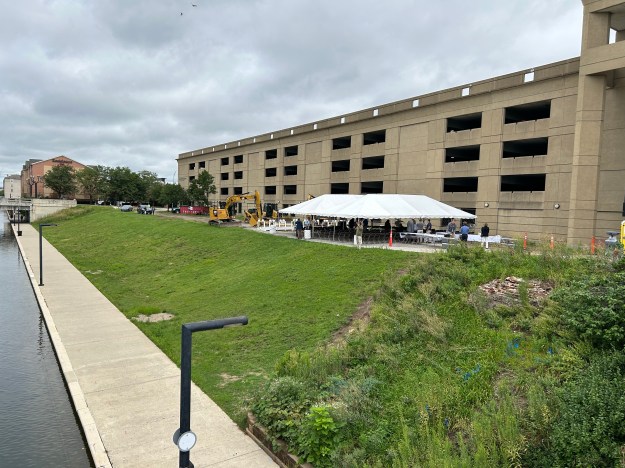

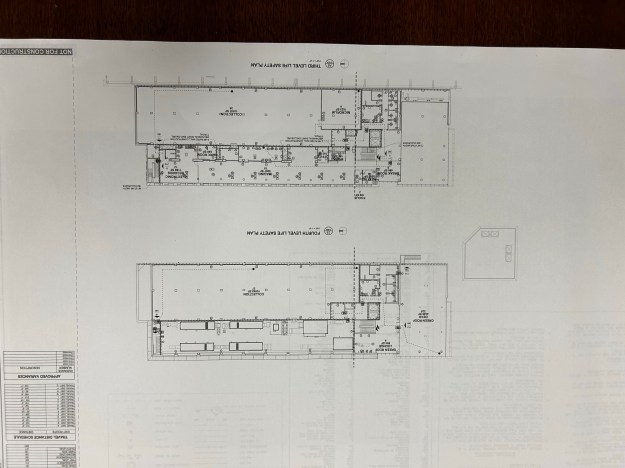
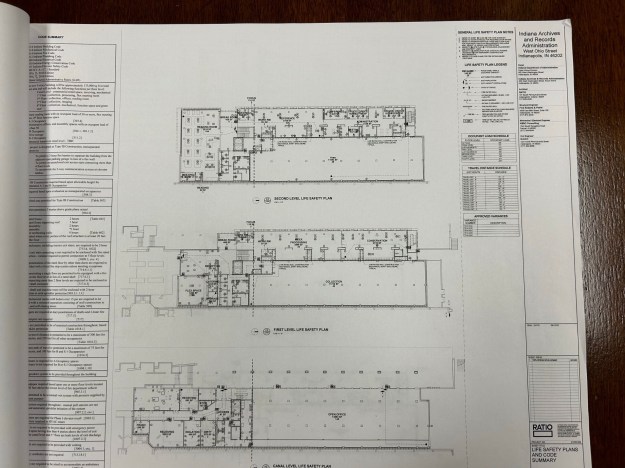



 Notes From The Indiana State Archives